Thursday, December 24, 2009

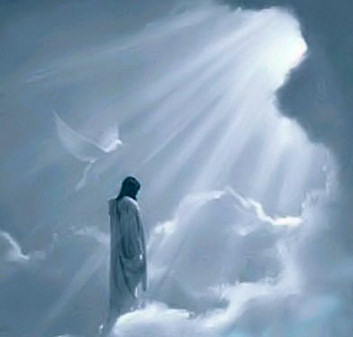
In Hoc Anno Domini: So the light came into the world.

When Saul of Tarsus set out on his journey to Damascus the whole of the known world lay in bondage. There was one state, and it was Rome. There was one master for it all, and he was Tiberius Caesar.

Everywhere there was civil order, for the arm of the Roman law was long. Everywhere there was stability, in government and in society, for the centurions saw that it was so.

But everywhere there was something else, too. There was oppression—for those who were not the friends of Tiberius Caesar. There was the tax gatherer to take the grain from the fields and the flax from the spindle to feed the legions or to fill the hungry treasury from which divine Caesar gave largess to the people. There was the impressor to find recruits for the circuses. There were executioners to quiet those whom the Emperor proscribed. What was a man for but to serve Caesar?

There was the persecution of men who dared think differently, who heard strange voices or read strange manuscripts. There was enslavement of men whose tribes came not from Rome, disdain for those who did not have the familiar visage. And most of all, there was everywhere a contempt for human life. What, to the strong, was one man more or less in a crowded world?

Then, of a sudden, there was a light in the world, and a man from Galilee saying, Render unto Caesar the things which are Caesar's and unto God the things that are God's.

And the voice from Galilee, which would defy Caesar, offered a new Kingdom in which each man could walk upright and bow to none but his God. Inasmuch as ye have done it unto one of the least of these my brethren, ye have done it unto me. And he sent this gospel of the Kingdom of Man into the uttermost ends of the earth.

So the light came into the world and the men who lived in darkness were afraid, and they tried to lower a curtain so that man would still believe salvation lay with the leaders.

But it came to pass for a while in divers places that the truth did set man free, although the men of darkness were offended and they tried to put out the light. The voice said, Haste ye. Walk while you have the light, lest darkness come upon you, for he that walketh in darkness knoweth not whither he goeth.

Along the road to Damascus the light shone brightly. But afterward Paul of Tarsus, too, was sore afraid. He feared that other Caesars, other prophets, might one day persuade men that man was nothing save a servant unto them, that men might yield up their birthright from God for pottage and walk no more in freedom.

Then might it come to pass that darkness would settle again over the lands and there would be a burning of books and men would think only of what they should eat and what they should wear, and would give heed only to new Caesars and to false prophets. Then might it come to pass that men would not look upward to see even a winter's star in the East, and once more, there would be no light at all in the darkness.

And so Paul, the apostle of the Son of Man, spoke to his brethren, the Galatians, the words he would have us remember afterward in each of the years of his Lord:

Stand fast therefore in the liberty wherewith Christ has made us free and be not entangled again with the yoke of bondage.

This editorial was written in 1949 by the late Vermont Royster and has been published annually since.

Link to Story

**Happy Christmas Eve!

Monday, December 21, 2009

Christmas Traditions Part 3: Christmas Trees

The origins of the evergreen Christmas tree are so shadowy, few places agree where it came from, but we’re pretty sure it wasn’t Bethlehem. Ancient Egypt is a contender. Around the time of the winter solstice—the longest night of the year, occurring on either Dec. 21 or 22—Egyptians would bring palm branches into their homes, taking a hopeful stand against the encroaching darkness.

Ancient Rome might also be a culprit. In late December, the Romans observed the feast of Saturnalia—a week-long winter festival honoring the god Saturn—by making evergreen laurel wreathes and placing candles in live trees.

Our Christmas trees might have roots in Scandinavian folk mythology. According to these beliefs, the entire universe was contained in a really big ash tree called Yggdrasil, which balanced the sun, moon and stars in its evergreen branches. With this in mind, the ancient Scandinavians celebrated the winter solstice by hanging apples, nuts and little animal-shaped cakes from evergreen trees. Perhaps the ornamented trees reminded them of their place in the universe. Or rather, the universe’s place in Yggdrasil.

Regardless of the culture, these tree-related customs reminded people winter wasn’t forever. After all, the winter was a scary time for ancient pagans. The days grew shorter. The sun appeared less and less. Vegetation withered up during the winter months. But evergreen trees? The harsh winters didn’t faze them. Maybe evergreens had magical powers. Maybe they were eternal. Which is why eventually connecting them with Jesus wasn’t all that difficult.

One Christmas tree origin story involves St. Boniface, an eighth-century monk and the eventual archbishop of Germany. He had a run-in with some local tribes who worshiped a tree at Geismar known as the Holy Oak of Thor. They considered the tree some kind of leafy deity. Boniface wasn’t too keen on this, so he did what any good saint would do: He chopped down the sacred tree.

According to legend, the tree split to reveal a small, miraculous fir tree growing amid its gnarled roots. Boniface seized the timely metaphor and suggested the little fir tree ought to remind those pagans of Jesus. See how it seems to point toward heaven? And see how its color is constant, like the love of Christ? And see how it sorta seems to symbolize the death of paganism and the rise of Christianity?

So Boniface (and in other tales, Martin Luther) gets credit for the Christmas tree. But most scholars agree this story is probably apocryphal. It pretty conveniently disguised the fact that evergreen trees have always played a big role in winter solstice observances. A big, fat, pagan role.

Link to Story

Friday, December 18, 2009

Christmas Traditions Part 2: The Date

Question: What day was Jesus born?

Answer: We don’t know, but we’re pretty sure it wasn’t Dec. 25.

Even the date of Christmas doesn’t belong to Christianity. While the Bible doesn’t record the date of Christ’s birth, there’s little to suggest He was actually born on the 25th of December. As you might recall from the Christmas story, there were “shepherds abiding in the field, keeping watch over their flock by night” (Luke 2:8, KJV). December, in Palestine, is in the middle of the region’s cold, October-to-April rainy season. Sheep would have been inside, not out in the fields.

Regardless, Dec. 25 is a date with a lot of history. It was the feast of the Son of Isis in ancient Babylon, a festival marked with plenty of eating, drinking and even gift-giving. Dec. 25 often marked the end of the Romans’ Saturnalia celebration. The date also coincided with Yule, an ancient German pagan festival occurring on or around Dec. 25.

And in the early years of Christianity, that specific day was celebrated as the birthday of the Persian sun god, Mithras. The religion built around this deity, Mithraism, had become a major rival to the Church in fourth-century Rome, and Dec. 25 was a big party day for the pagans whom Christians hoped to convert. Which posed a problem: How do we convert these guys if we immediately make them give up their favorite feast?

So, even though the early Church hadn’t really bothered to observe Christ’s birth at all, Pope Julius I chose Dec. 25 as the official feast day to honor Baby Jesus. And what a coincidence that this date not only competed with rival religions but made it a lot easier for new converts to drop their paganism while holding on to the day’s merriment, feasts and fun. The papal pronouncement became official in 375 A.D. Suddenly Jesus had a birthday.

Link to Story

Thursday, December 17, 2009

Christmas Traditions Part 1: Gift Giving


Hey everyone!

For those of you who wonder why you hang ornaments on pine trees, or give gifts, or practice other Christmas traditions, you are in luck! Enjoy the coming few posts before the big C (Christmas) Day. Much peace and love, Vince

The gifts. This one’s a no-brainer, right? Don’t we give each other gifts on Christmas (and on our birthdays) because the wise men gave Jesus gifts on His birthday?

Not so fast. Yes, the wise men gave gifts to Jesus. But if you’ll read Matthew’s Gospel carefully—instead of, say, getting your history from nativity scenes—you’ll notice the wise men didn’t actually show up at the manger. At all. According to Matthew 2:16, they arrived two years after Christ’s birth. So those weren’t exactly birthday gifts. It’s more likely they were traditional and symbolic gifts reserved for a king.

Unless you only give Christmas presents to royalty, your holiday gift-giving owes less to the wise Magi and more to Saturnalia, the aforementioned Roman winter solstice feast. Its celebrants would exchange small gifts with each other according to socioeconomic status. The rich gave jewelry or gold coins. The poor gave homemade edibles. Children would give and receive little clay dolls. And everyone gave “strenae,” evergreen boughs thought to bring good luck.

But, hark! Gift-giving isn’t completely pagan. It does have a legitimate—but probably legendary—connection to Christianity, thanks to St. Nicholas. Yes, that St. Nicholas. The kindly fourth-century bishop of Myra used his family’s affluence to give anonymous gifts to the poor (including once dropping a bag of gold down a family’s chimney). After he died of old age, admiring townsfolk continued his habit of secret gift-giving, with credit going to jolly old St. Nick.

Giving gifts to the poor in honor of Jesus? For something rooted in paganism, it fits pretty nicely into a Christian framework.

Story Link

Monday, December 7, 2009

To Give, or Not to Give to the Homeless?


My stomach is empty, as is my fridge. It is very much time to make a trip to the grocery store. I grab my wife, wallet and keys, and fly out the front door.

Minutes later, ravenous, I am scouring the aisles of the grocery store, piling sustenance into my cart. I have breads, cereals, meats, cheeses, puddings, pastas, frozen burritos, and produce. Kozy Shack, Life, Prego, Tillamook. Never grocery shop when you are hungry. Your savings will disappear at the checkout.

With a full cart (and then some) my wife and I exit the store. I am almost sprinting, ready to tear open a bag of Kettle Chips for the car ride home.

We get to the car and unload our groceries, caught up in the excitement of our forthcoming gluttonous feast. Then, we hop in and speed out of the parking lot. As we approach the first stoplight, we look to our left and notice a woman sitting on the median.

She is perched on an overturned shopping cart. She is dressed in tattered, mismatched clothing. Next to her is another cart filled with empty soda cans and plastic water bottles. Amidst the recyclables are several bags of belongings—socks, shirts, and small household items. Her face is sullen and vacant. She does not speak, but only looks up at us through weathered, distant eyes. The woman holds a sign:

Homeless.
Need Help.
God Bless.

Full story here.